
Well, March is almost over, and while I love winter storms and wild weather, I am going to say that I am ready to welcome in April and some spring weather. But the good news is that I got lots of reading done, so here’s what I’m sharing with you this month. Enjoy! (And, as always, if you like my recs, feel free to subscribe, but please – don’t pay me.)
Top Books of the Month
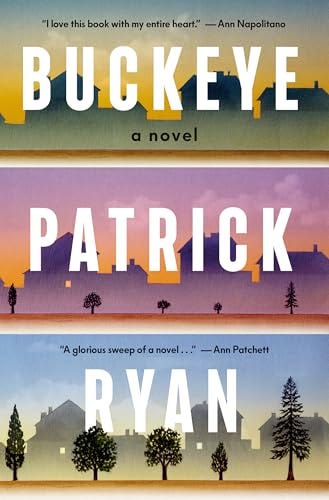
This was our book club’s pick a few months ago. I didn’t read the book, but I went to our meeting anyway. (I know. It’s shameful.) My friends talked in generalities about the plot, the big ideas, and the characters, not wanting to spoil the book for me. “I didn’t like any of these characters. At all,” I remember one friend saying. I heard her voice over the next month as I listened to the audio version of Buckeye. I get it. The four main characters of this novel are self-absorbed, make foolish choices, and are far too convinced that they are always right. In short, they are human. And that’s what makes this book.
Buckeye is as midwestern a novel as you can write. It opens in the fictitious small town of Bonhomie (think of the French, “bonhomme,” or “good man”), Ohio at the end of the Second World War. The story follows two couples whose lives intersect in various ways through the mid-1970s. And Ryan does a great job of creating a local setting, showing how the fashion, interior design, television programs, the town, and even the buckeye tree in the front yard change over these 35+ years, as well as how the national events of the different decades impact the characters’ lives. Each chapter builds and grows slowly to give you a larger picture of these four characters and the world they live in. The trick here is that the movement is slow. It’s like corn in the field—the stories do grow, but it takes a while.
It seems the idea of the novel is how our choices--often blind choices made without much forethought--become our destiny. But you need a big, long novel to demonstrate this, which is why Buckeye works.
It is a good read. Oh, and the ending of the novel? It’s perfect.
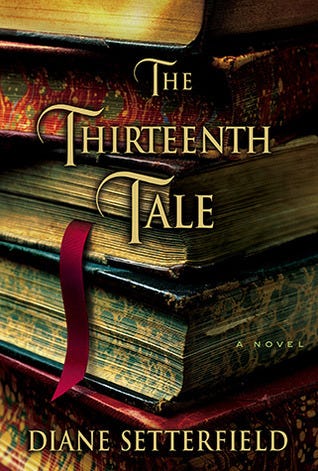
The Thirteen Tale by Diane Setterfield
This is a gorgeous gothic read; it feels like Emily Bronte’s Wuthering Heights crossed with Agatha Christie’s The Body in the Library (and what’s not to love about that?)
The premise is simple: A young woman is asked to write a famous author’s biography; this author is a famous recluse who has never told her “true” story to anyone. The novel is nested narrative, or story within a story. We follow the biographer as her relationship with the author develops, and we learn the backstory of the author’s life, which is told to us in snippets throughout the novel.
Setterfield, the author of Once Upon a River, knows how to create lush characters that grow organically in her stories, and The Thirteen Tale is no exception. The setting is compelling, and the language is beautiful. Oh, and the way Setterfield talks about reading is exactly right for those of us who are avid readers. She includes these observations because this novel is, in part, about the power of a story to create the world around us.
There are some books that engross you so completely, they make you a bit sad when they are over. This is one of them.
Also Read and Recommend
The Turner House by Angela Flourney
Flourney, author of The Wilderness (another great read), tells the story of a large black family that grew up in a house in Detroit, a house that is now empty and crumbling to the ground. It’s a rambling, surprising story filled with interesting characters--much like the house itself.
The Lake, the River, and the Other Lake by Steve Amick
Set in a fictitious tourist town on Lake Michigan, this story will make you laugh out loud as Amick presents a cast of characters who are all deeply flawed, but most are redeemed at the end. A bit “irreverent” (if you read the book, you’ll know what I mean) and more than a bit off-color, but a completely engaging book.
This memoir explores Lanham’s connection to his “home place,” a farm in South Carolina, outlining his complex relationship with the natural world and growing up as a black man in the South. Lanham is a scientist, but he writes in an almost poetic voice about the places he calls home.
I’m reading Steve Amik’s book right now….Loving his work!